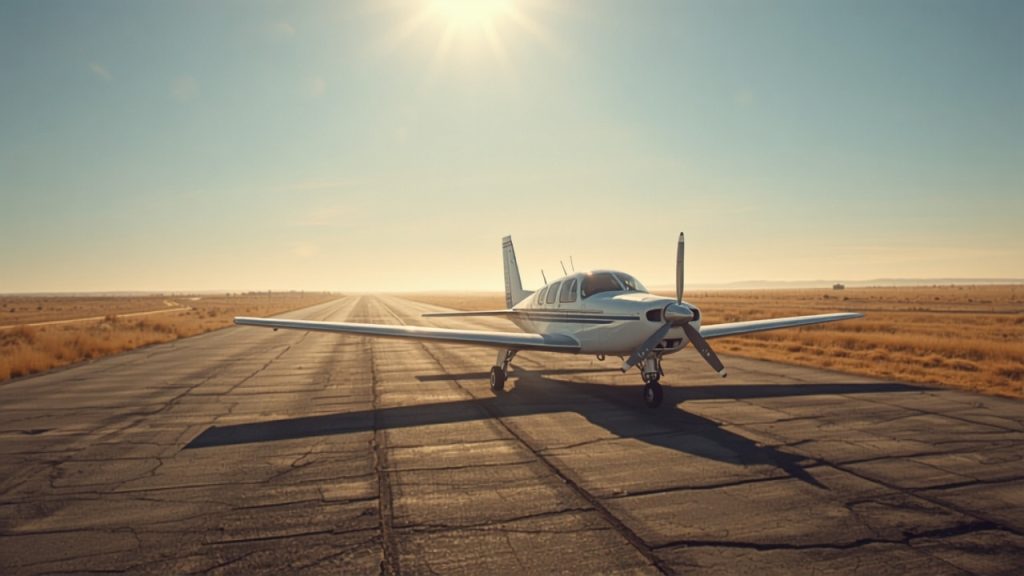
Every CPL student eventually asks some version of the same question: if flying the real aircraft is what actually counts, why spend so many hours in a box that doesn’t leave the ground? The honest answer is that simulator training complements real flight hours in ways that the aircraft itself often can’t match — not as a replacement for airborne experience, but as a controlled environment where certain kinds of learning happen faster, safer, and more repeatably. Understanding what a simulator is actually good at, and where it falls short, changes how a student approaches sim sessions from something to tolerate into something to use deliberately.
What Simulator Training Actually Involves
Modern training devices used in CPL programs range from basic procedure trainers, which replicate cockpit layout and instrument logic without full motion, to more advanced flight training devices that add realistic control feel and environmental cues. Neither is meant to substitute for actual flight time in a logbook sense — most regulatory frameworks are quite specific about how much simulator time can count toward a license and how much must come from the aircraft itself. What they are exceptionally good for is isolating one skill or scenario at a time, without the noise, workload, and time pressure of a real flight.
A sim session can pause. It can rewind. An instructor can freeze the exact moment a student’s scan broke down and walk through what should have happened instead. That kind of immediate, precise feedback loop is difficult to replicate in the air, where the aircraft keeps moving and the moment for correction often passes before the debrief even begins.
Practicing Emergencies You Genuinely Cannot Fly
This is where simulator training earns its place most clearly. Certain scenarios simply cannot be safely rehearsed in a real aircraft — a full electrical failure at night, an engine fire during takeoff roll, cascading instrument failures, or a complete loss of primary flight displays. In the sim, an instructor can introduce these failures at the worst possible moment, deliberately, and let the student work through the decision tree in real time without any actual risk.
Students often describe their first exposure to a serious simulated emergency as genuinely disorienting — which is exactly the point. The goal isn’t to make the failure feel routine on the first try. It’s to build a reference experience the student can draw on later, so that if something similar happens in the real aircraft, it isn’t the first time their brain has had to process that specific kind of chaos.
Scenario-Based Learning, Repeated Until It Sticks
Because a sim session can be reset instantly, instructors can run the same failure two or three times in a row with small variations, watching how the student’s response changes with each attempt. That kind of rapid-fire repetition on a specific failure mode would be impractical, and in many cases unsafe, to attempt repeatedly in an actual aircraft.
Building Procedural Fluency Through Repetition
Beyond emergencies, simulators are where checklist flow, radio phraseology, and instrument procedures get drilled until they become close to automatic. Flying an ILS approach for the first time in real weather is a very different experience than flying it for the twentieth time in a simulator — but that twentieth rehearsal is precisely what makes the real one manageable. Efficient repetition is the simulator’s quiet strength: students can fly the same departure, the same holding pattern, or the same instrument approach repeatedly within a single session, refining timing and technique without the setup and reset time that a real flight requires between attempts.
This is also where a well-structured commercial pilot training program tends to sequence sim sessions deliberately — introducing a new procedure in the simulator first, letting students build a working mental model, and only then transferring that procedure into the aircraft where workload and sensory input are higher.
Where the Simulator Falls Short
None of this means the simulator can carry the training on its own, and good instructors are usually the first to say so. There are things a simulator, even a sophisticated one, cannot fully reproduce:
- The physical sensation of genuine turbulence, wind shear, or an actual stall — the seat-of-the-pants cues pilots rely on alongside their instruments.
- Real consequence and the physiological response that comes with it — elevated heart rate, adrenaline, and the weight of knowing an error has real stakes.
- Unpredictable real-world variables like shifting weather, live radio traffic congestion, or genuine mechanical quirks specific to an individual airframe.
- The subtle handling characteristics of a specific aircraft — control feel, trim behavior, and how it responds near the edges of its performance envelope.
This is why regulators cap how much simulator time can substitute for actual flight hours, and why experienced instructors treat the two as partners rather than interchangeable options. A student who is excellent in the sim but has never felt real turbulence, or dealt with an actual crosswind landing, still has real learning ahead of them in the aircraft.
Getting the Blend Right
The most effective CPL training sequences don’t treat simulator time as a cheaper stand-in for flight hours, or as a box to check before “real” training begins. They treat it as a distinct tool aimed at distinct outcomes — procedural fluency, emergency exposure, and focused repetition — that then gets reinforced and tested against reality in the actual aircraft. Students who approach sim sessions this way, rather than as a formality, tend to arrive at their aircraft lessons with sharper instincts and fewer basic procedural stumbles.
If you’re weighing how much sim exposure to expect in a given training path, it’s worth asking the training team directly how their program sequences simulator and flight hours together, and what specific scenarios get covered in each. A program with clearly defined student support around debriefs and progress tracking usually means sim time is being used with intention rather than just logged for its own sake.
Simulator training doesn’t replace what happens in the aircraft — it prepares a student to get more out of every hour they eventually spend there.