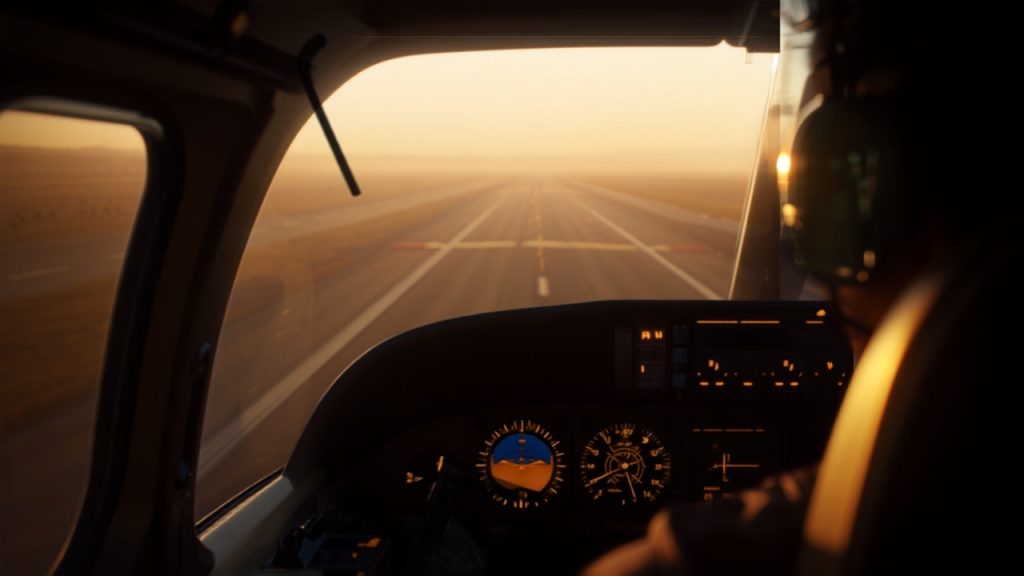
Almost every week a student or a worried parent asks me the same thing, usually in a low voice at the back of the room: “I wear glasses. Is that the end of the pilot dream?” I understand the fear. Eyesight feels like the one thing you cannot study harder to fix.
The honest picture is more nuanced than a yes or a no. Vision is judged by a medical examiner, against standards, on your actual eyes, not by a rumour from a classmate. This guide explains how the process works, what to expect, and what to do before you commit months of your life to training. The wording here is general, because only a DGCA-approved medical examiner can tell you where you stand.
Quick answer
Wearing glasses does not automatically rule you out of pilot training. Training schools report that many applicants with corrected vision are assessed every year, but the verdict depends on your own eyes and the class of medical. Only a DGCA-approved medical examiner can assess you, so book that appointment before anything else.
Does wearing glasses automatically disqualify you from becoming a pilot?
No. Training schools report that the question is not whether you wear corrective lenses but how your vision is measured and whether it falls within the limits set by the regulator. Those limits are applied by the examiner, case by case.
Treat any claim of a universal yes or no with suspicion, because eyes differ widely. Someone with mild correction may be assessed very differently from someone with a stronger or less stable prescription.
What does the examiner actually check about your eyes?
Training schools describe the eye assessment as more than reading a chart. Expect several parts, and note that the exact tests and limits come from the examiner and the regulator, not from this article.
- Distance and near vision, with and without correction.
- Colour vision, which is checked separately from sharpness.
- Eye movement, focusing and how your two eyes work together.
- A general eye health check for conditions that could change quickly.
The examiner may also ask about any previous eye procedures or conditions, so be honest and bring old prescriptions.
Does colour blindness matter more than glasses?
Many students are surprised to learn that colour vision is often the bigger question. A person can see sharply with glasses and still need a separate colour vision assessment. Cockpit displays, charts and light signals use colour, so examiners take it seriously.
If you have ever struggled with colour tests at school, mention it during your appointment rather than hoping it goes unnoticed.
Which medical should you take first?
The medical your training path needs is the one to ask about. Our guide on the Class 1 medical for student pilots explains the commercial route, and the examiner will tell you which assessment applies to you at the start.
A sensible order for many students is: medical first, then training enrolment. Training schools report that students who delay the medical sometimes discover a problem only after they have committed months of time.
What should you do before the appointment?
A little preparation avoids avoidable surprises.
- Carry your current glasses or lenses and your latest prescription.
- Get your eyes checked by your own eye doctor a few weeks earlier so nothing is a shock.
- Sleep well and avoid long screen sessions the night before.
- List any past eye problems, surgeries or medicines.
None of this changes the result. It simply lets the examiner see you at your steady best.
What if the answer is not a clean yes?
Sometimes the examiner will say yes, sometimes no, and sometimes ask for more tests. A no for one path does not always end a love of aviation. Ask the examiner what the next step is, and ask what other roles in aviation may remain open.
Please do not decide for yourself using an online forum. Our post on marks needed in 12th to become a pilot shows how many myths float around; the medical question has even more.
What is a sensible path from here?
Here is the order I give students who ask me.
- Finish or continue your 12th with the subjects you can manage.
- Find a DGCA-approved medical examiner. Our note on medical examiner centres in Chennai is a starting point.
- Take the medical you are advised to take.
- Only then apply to a flying school, after you check that it is DGCA approved.
If you are still deciding between streams, our guide on becoming a pilot after 12th commerce or arts may help.
How do parents usually feel about this, and what helps?
Parents tend to worry in two directions at once: that their child will be rejected, and that time and effort will be wasted on a dream that medicine closes. Both worries are reasonable, and both are answered by the same step. Book the assessment early, go together, and let the examiner explain the result in person.
Students sometimes ask me whether they should keep quiet about their glasses until after joining. Please do not. Flying schools and examiners deal with this every day, and early honesty protects your time and your family’s trust.
What can you do for your eyes in the meantime?
Look after the eyes you have. Keep your prescription current, take regular breaks from screens, and get proper sleep. These habits will not rewrite an examiner’s findings, but they keep your eyes comfortable and your records clean. Avoid unverified eye exercises or products promising to remove glasses, because they can confuse your history and do nothing for your assessment.
Meanwhile, keep learning. Read about how flying works, visit an airfield if you can, and study the ground subjects that every student needs. Interest and discipline count for a great deal once the medical question is settled.
Frequently asked questions
Can I become a pilot if I wear glasses?
Many applicants with corrected vision are assessed. Training schools report that the result depends on your own eyes and the medical class, so only a DGCA-approved medical examiner can confirm your eligibility.
Is laser surgery a shortcut to meeting the standards?
Do not assume so. Any past procedure must be declared, and the examiner decides how it affects your assessment. Ask the examiner before booking anything.
Will contact lenses be treated differently from glasses?
The examiner will ask how you correct your vision and may assess it accordingly. Bring whatever you actually use and ask the examiner directly.
Should I take the medical before joining flying school?
Training schools report that this is the safer order, because it tells you early whether your path is open before you commit time to training.
Can I trust an online list of eyesight limits?
Treat such lists as general reading only. The limits applied to you come from the regulator through the examiner, who sees your actual results.
Where can you take the next step?
If you want to talk through your options with people who teach student pilots every day, visit VeritasTech Pilot Academy, Ambattur, Chennai. Bring your questions, and bring your medical paperwork once you have it.