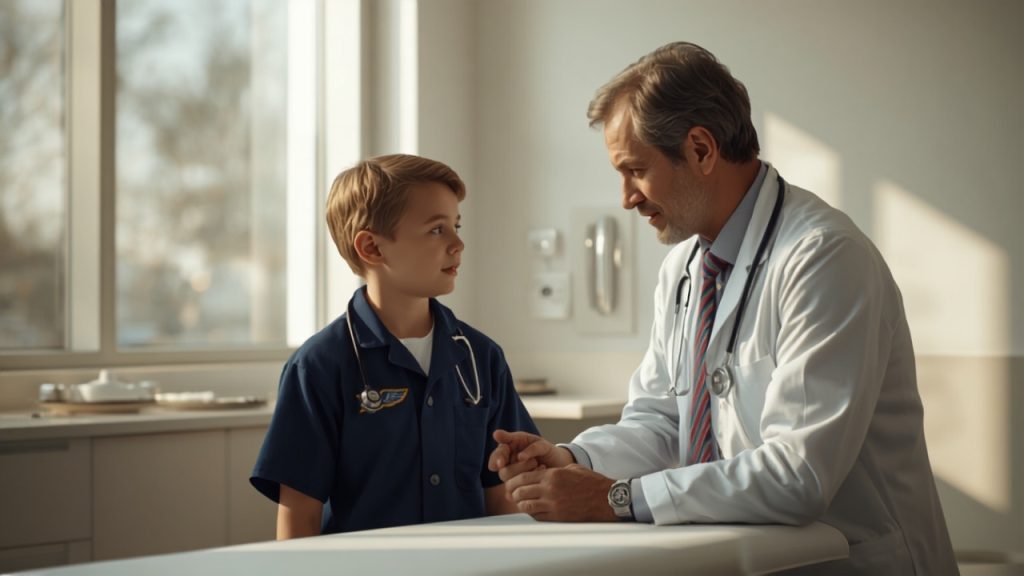
If you have started reading about student pilot licences, you have met the phrase Class 2 medical, usually without a clear explanation. It sounds like a hospital test with a pass mark. In practice it is a structured health check carried out by a specific kind of doctor, and it is one of the first formal steps for many students.
I will explain what it is, why it exists, how it differs from the Class 1 medical, and how to prepare calmly. A note up front: I am an instructor, not a doctor, and rules can change. Everything here is general guidance, so confirm details with a DGCA-approved medical examiner.
Quick answer
A Class 2 medical is a health assessment by a DGCA-approved medical examiner. Training schools report that it is commonly linked to private-level flying and early student pilot steps, while the Class 1 medical is linked to commercial flying. Ask the examiner which one your plan needs.
Why do pilots need a medical at all?
An aircraft is a place where a sudden health problem can affect more than one person. The medical exists to catch conditions that could interfere with safe flying, and to review them again over the years.
It is not a judgement of you as a person. Think of it as the aviation version of a thorough fitness check, done by someone who knows what the cockpit demands.
What is the difference between Class 1 and Class 2?
Training schools describe the two as different levels of assessment suited to different kinds of flying. The table below is a simplified comparison for orientation only.
| Point | Class 1 | Class 2 |
|---|---|---|
| Usually linked to | Commercial flying | Private-level flying and early student steps |
| Who conducts it | DGCA-approved medical examiner | DGCA-approved medical examiner |
| Depth of assessment | More detailed | Less detailed |
| Who decides which you need | The examiner and the regulator | The examiner and the regulator |
Read our guide to the Class 1 medical certificate for the commercial side.
Who conducts the Class 2 medical?
Only a DGCA-approved medical examiner. A family doctor, however excellent, cannot issue it. Before you book, confirm that the examiner or centre is on the approved list.
If you are in Chennai, our post on medical examiner centres in Chennai is a useful start, though you should always verify current details yourself.
What usually happens during the assessment?
Training schools report a sequence like this, though the exact tests are decided by the examiner.
- Paperwork and identity checks, plus a health history form.
- General physical examination, including blood pressure and heart check.
- Eye and colour vision assessment.
- Hearing assessment.
- Some routine tests as the examiner requires.
- A discussion of anything unusual and the examiner’s decision.
Expect to be there for a good part of a day, so do not schedule exams or travel around it.
How should you prepare?
The best preparation is dull and sensible.
- Carry photo identification and any documents the centre asks for.
- Bring glasses, lenses and old prescriptions if you use them.
- List medicines and past health issues, and declare them honestly.
- Rest well and eat normally the day before.
Hiding a condition is the one thing that can hurt you. Honest disclosure lets the examiner guide you properly.
How does it connect to your student pilot licence?
The medical is one piece of the early paperwork. Our walkthrough of the student pilot licence in India shows where it fits with other steps, so you can plan the order without rushing.
Do not collect certificates in a random order. Ask your flying school and your examiner which sequence matters for your path.
What if the examiner finds a concern?
It does not always mean the end. The examiner may suggest further tests, a specialist opinion, or another assessment later. Ask clearly what is needed and in what order.
Please avoid diagnosing yourself from the internet. Your examiner has your actual results, and you do not.
What does a typical student worry about on the day?
Nerves are normal. Students tell me they fear a hidden problem, or that a slightly high blood pressure reading from anxiety will count against them. Examiners see anxious applicants all the time, and they know a first appointment is stressful. Arrive early, breathe, and answer questions plainly.
If you do get an unexpected reading, ask what the examiner suggests. Sometimes a repeat check on another day settles it. Sometimes it points to something worth treating for your own health, which is a good outcome in itself.
How long does the paperwork stay useful?
Medical certificates have a validity period, and they are renewed on a schedule that the regulator sets. Do not assume that a medical taken long before training will still suit your plan when you start flying. Ask the examiner about validity and keep the original document safe along with copies.
Treat the certificate like a passport for your training: keep it flat, keep it dry, and note the date it needs attention so renewal never catches you off guard. A student who plans these small dates early avoids last-minute stress before a flying lesson or an exam.
Is it worth doing the medical early?
Yes, for most students. An early assessment turns a vague worry into a clear answer, and it lets you plan your next steps with confidence. If the result is positive, you can move on to the flying school, the ground subjects and the licence paperwork knowing your health is not a hidden question mark. If the result needs follow-up, you learn that while you still have every option open, which is always better than learning it late.
Frequently asked questions
What is a DGCA Class 2 medical?
It is a health assessment by a DGCA-approved medical examiner. Training schools report that it is commonly linked to private-level flying and early student steps. Confirm what your path needs with the examiner.
Can my family doctor do it?
No. The assessment must be done by a DGCA-approved medical examiner, so confirm that the examiner is on the approved list before booking.
Do I need Class 1 or Class 2 first?
It depends on your plan. Ask the examiner and your flying school which assessment applies to your path before you book.
How long does the appointment take?
Training schools report that it can take a good part of a day, depending on the centre. Ask the centre when you book.
Should I hide a past health issue?
No. Declare everything honestly, because the examiner can only guide you properly when they have the full picture.
Where can you take the next step?
If you want to talk through your options with people who teach student pilots every day, visit VeritasTech Pilot Academy, Ambattur, Chennai. Bring your questions, and bring your medical paperwork once you have it.