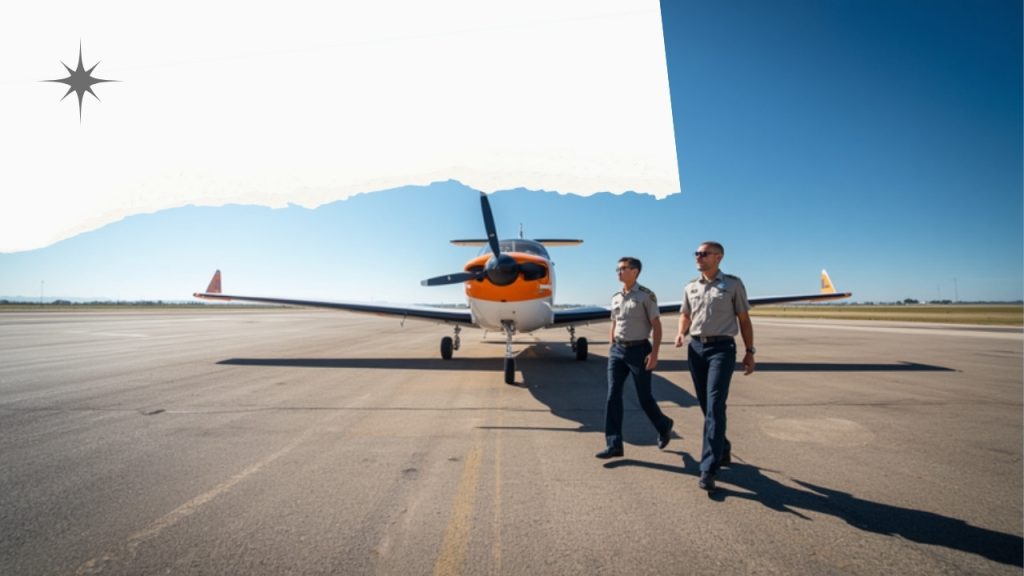
Ask anyone who has actually been through it, and they’ll tell you a day in the life of a student pilot in India rarely starts with an aircraft. It starts with a phone alarm at an hour that still counts as night, a torch beam bouncing off a hostel corridor, and the particular cold of a Chennai morning in the half hour before the city wakes up. By the time the sun clears the horizon, most trainees have already been awake, dressed, and sitting in a briefing room for the better part of an hour. That’s the part nobody puts in the recruitment brochure.
The Pre-Dawn Briefing Room
Briefing usually starts around 5:30, sometimes earlier if the flying schedule is full and the instructors want to beat the afternoon thermals. The room smells like instant coffee from a flask someone’s mother packed, and there’s always one trainee flipping frantically through a checklist they meant to memorize the night before. Nobody talks much. The instructor walks in, tosses the day’s aircraft serviceability sheet on the table, and the room goes quiet in the way a classroom goes quiet before an exam, except this exam might involve a crosswind.
This is where the day’s real shape gets decided — not by the trainee, but by weather, aircraft availability, and a duty roster that changes overnight more often than anyone would like. A student who was slotted for a 7 a.m. circuit detail might find themselves bumped to the afternoon because the tailwheel trainer needs an oil top-up, or because visibility over the practice area is sitting right at the edge of what’s allowed. You learn very quickly that flexibility isn’t a soft skill in this line of work. It’s survival.
Ground School: Where the Real Work Happens
Here’s the thing most outsiders get wrong about student pilot life: flying is the reward, not the routine. The bulk of the day, hour for hour, happens on the ground — in classrooms with whiteboards covered in fuel-flow diagrams, in one-on-one sessions where an instructor grills you on emergency procedures until you can recite them without thinking. Air Navigation, Aircraft Technical, Air Regulations, Radio Telephony — each subject has its own rhythm, its own stack of dog-eared reference books, its own way of humbling a trainee who thought they’d studied enough the night before.
A typical morning block might run two straight hours of technical theory before anyone even looks toward the flight line. Instructors here tend to teach the way flying itself demands — precise, unforgiving of shortcuts, quick to correct a wrong assumption before it becomes a wrong habit. It’s not lecture-hall passive learning. You get cold-called. You get asked to draw the fuel system from memory on the board while six other trainees watch and silently thank whoever isn’t them.
Our commercial pilot training program structures ground school this way deliberately, because trainees who can defend their answers out loud tend to make steadier decisions later, in the aircraft and in the briefing room alike.
Meteorology, Before You’ve Had a Proper Coffee
Met class deserves its own mention because nothing quite tests a half-awake brain like decoding a METAR at 6 a.m. The instructor reads out cloud base, dew point spread, and wind shear potential like it’s the most natural conversation in the world, and you’re sitting there trying to remember whether a TEMPO group changes your go/no-go decision. Chennai’s coastal weather doesn’t make it easier — sea breeze fronts that roll in without much warning, pre-monsoon buildups that turn a clear morning into a hazy, bumpy afternoon by eleven. Trainees learn to read the sky itself, not just the forecast sheet, because out here the two don’t always agree. There’s a particular kind of dread in watching a promising sunrise curdle into low stratus by the time your slot comes up, knowing the whole day’s flying plan just got rewritten in real time.
Waiting on the Flight Line
This is the part that surprises almost everyone who imagines student pilot life as hours spent aloft. The actual flying — the circuits, the stalls, the cross-country legs — often adds up to less time than the waiting around it. You sit near the flight line in a plastic chair that’s seen better decades, headset resting on your knee, watching the aircraft ahead of you in the circuit, tracking its position by ear before you ever see it. Sometimes a detail gets scrubbed because of a snag the engineers flag during the daily inspection, and the forty-five minutes you’d mentally blocked out for flying turns into three hours of sitting, refiling paperwork, and rechecking your own flight plan just to have something to do with your hands.
When your turn does come, it moves fast. Walk-around, strap in, radio checks, taxi clearance — and then you’re airborne, and the ground drops away, and every early alarm and every met class suddenly makes sense for exactly the twenty or forty minutes you’re up there. Then you’re back, debriefing with your instructor on what went right and what didn’t, and the aircraft is already being prepped for the next student in line. The sortie itself might be the shortest single block of the entire day.
Staying Flight-Ready
Nobody talks enough about the physical side of this training. Sitting in a small trainer cockpit for an hour in Chennai heat, sweating through a flight suit while managing controls, checklists, and radio calls simultaneously, takes a real physical toll that surprises people who assume flying is a purely mental exercise. Fatigue creeps in fast, and fatigue in the cockpit is not a minor inconvenience — it’s the kind of thing instructors watch for constantly, because a tired student makes sloppier decisions and misses radio calls they’d normally catch without thinking.
- Early morning runs or a gym session before briefing, squeezed in because afternoons rarely allow it
- Deliberate hydration through the day, since dehydration and heat fatigue degrade concentration faster than most trainees expect
- Attention to sleep timing, which sounds obvious until you’re trying to study at 10 p.m. after a physically draining flying day
Medical fitness requirements exist on paper, but staying flight-ready day to day is a personal discipline nobody enforces for you. The trainees who last through the program tend to be the ones who treat their own body like part of the checklist — not an afterthought.
Evening Study and the Discipline Nobody Warns You About
By evening, most trainees are physically tired in a way that has nothing to do with exertion and everything to do with sustained concentration — hours of technical material, a flying detail that demanded total focus, a debrief that picked apart every small error. And this is exactly when the real study session is supposed to begin. It’s harder than it sounds. The temptation to let the evening dissolve into scrolling a phone or collapsing into bed is constant, and it’s precisely the discipline that separates trainees who progress smoothly from those who keep repeating exams.
Evening study usually means revisiting the day’s ground school notes, working through practice questions for the DGCA exams, and previewing tomorrow’s met briefing so the 5:30 a.m. version of yourself isn’t starting from zero. Some trainees study in pairs, quizzing each other on regulations until one of them gets an answer wrong and has to go look it up properly. Others prefer silence, a desk lamp, and three hours alone with a technical manual. Either way, it rarely feels optional. The syllabus doesn’t wait for anyone to feel rested.
What a Day in the Life of a Student Pilot Actually Teaches
Strip away the aircraft entirely, and a student pilot’s day still teaches something worth having. It teaches decision-making under fatigue — because most of the tougher calls in this training happen not when you’re fresh, but three hours into a long day when your judgment is already a little worn down. It teaches time management in a way few other pursuits do, because the schedule shifts constantly and you either adapt within minutes or you fall behind. And it teaches a specific, quiet kind of discipline: showing up at 5 a.m. for the tenth day running, studying met theory when you’d rather sleep, running through an emergency checklist one more time even though you got it right yesterday.
None of that shows up in a logbook. But talk to anyone a few years into an airline career, and they’ll usually tell you those early mornings and long waiting hours taught them as much about flying as the actual stick-and-rudder time did. That’s the part of a day in the life of a student pilot in India that’s easy to miss from the outside — and the part that ends up mattering most once the training wheels come off.
If you’re weighing what a day in the life of a student pilot in India actually looks like at our academy specifically, our flight training academy team is happy to walk you through a typical week, and our student services can answer the practical questions that come up once you’re actually living this schedule.