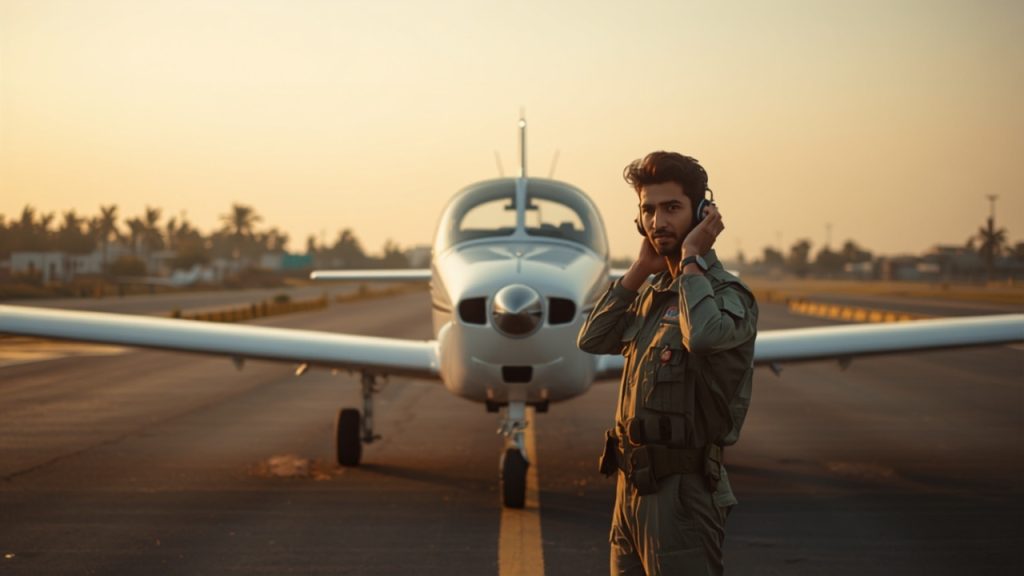
Nobody warns you enough about this before you start flight training: the physical toll sneaks up on you. It’s not dramatic, it’s cumulative — early alarms, hours standing on a hot apron doing pre-flight checks, long stretches of intense concentration in a cockpit that’s either baking on the ground or cold at altitude, and a schedule that refuses to follow a normal body clock. Physical fitness and diet for student pilots isn’t about looking a certain way or hitting a gym personal best. It’s about building a body and a routine that can actually hold up to the specific demands flight training puts on it, week after week, without your performance in the air quietly deteriorating.
Why student pilot fitness is a different problem than general fitness
Most fitness advice assumes a fairly predictable daily rhythm — wake up, eat, train, work, sleep. Flight training blows that up. You might have a 5 a.m. brief one day and an afternoon sortie the next, with ground school crammed in between. Add Chennai’s heat and humidity, which turn even a short walk across the apron into a real physiological stressor, and you’ve got a training environment that asks more of your body than a typical desk job or even a typical athletic schedule. The three things that matter most here are heat management, energy stability across irregular hours, and sustained mental sharpness — and each needs a slightly different approach than generic “eat clean, exercise regularly” advice gives you.
Handling heat exposure without it wrecking your flying day
Pre-flight walkarounds, taxiing with the canopy or door open before the AC kicks in, standing around during briefings on the tarmac — a lot of a student pilot’s day happens in direct heat, and dehydration creeps in long before you feel thirsty. By the time thirst registers, reaction time and concentration have usually already started slipping, which is the last thing you want mid-checklist.
- Start hydrating well before you reach the airfield, not once you’re already there and sweating. A liter or more of water in the two hours before report time makes a real difference.
- Carry electrolytes, not just plain water, especially on days with multiple sorties. Plain water alone during heavy sweating can actually dilute your sodium levels rather than replenishing them.
- Avoid heavy, oily breakfasts before a hot-weather flying slot. Digestion pulls blood flow away from where you need alertness, and greasy food sits uncomfortably once you’re strapped in and the cabin heats up.
- Wear breathable, light-colored clothing under your flight suit or uniform where regulations allow, and don’t underestimate a good pair of sunglasses and a cap during ground time — cumulative sun exposure adds up across a training course that runs for months.
Eating for irregular hours instead of fighting them
You can’t always control when you’ll eat during flight training, but you can control what you eat when the window opens. The biggest mistake student pilots make is skipping meals when the schedule gets tight and then overeating heavily at the next opportunity — that pattern tanks energy right when you need it and leaves you sluggish an hour later.
Keep something stable in your system, always
A slow-release breakfast — eggs, whole grains, or a combination with some protein — holds your energy steadier through a morning of ground school or flying than sugary cereal or just tea and a biscuit. If your report time is genuinely too early for a full meal, keep something simple like a banana or a handful of nuts as a bridge, and eat properly the moment your first break allows it.
Small, frequent intake beats one large meal
Between sorties or during a long ground school block, a heavy lunch can leave you drowsy for the next session — not ideal when you’re back in the air an hour later needing full concentration. Smaller, more frequent meals with a mix of protein, complex carbs, and some fat tend to keep blood sugar, and therefore concentration, more stable across a long day.
Watch caffeine, don’t ban it
Caffeine genuinely helps with early starts and sustained focus, and there’s no need to avoid it. The issue is timing — a late-afternoon coffee to push through a slump can wreck your sleep that night, which then compounds into worse fatigue the next flying day. Front-load caffeine earlier in the day and taper off by early afternoon.
Alcohol and flying don’t mix, and the margin matters more than people think
Every student knows the basic bottle-to-throttle rule, but it’s worth internalizing why it matters beyond just regulatory compliance — alcohol affects sleep quality and hydration well beyond the hours it takes to metabolize, which means a late night can leave you under-rested and dehydrated for a morning flight even after the alcohol itself has technically cleared your system.
Training your body for sustained concentration
Flying, especially during the early stages of training, is mentally exhausting in a way that’s hard to appreciate until you’ve done it — scanning instruments, managing radio calls, flying the aircraft, and absorbing instructor feedback simultaneously draws on the same mental reserves as several hours of intense study, compressed into a shorter window with higher stakes.
- Build cardiovascular base fitness. Regular moderate cardio — running, swimming, cycling — improves oxygen efficiency, which translates into better stamina during longer training days and helps you recover faster between demanding sessions.
- Don’t skip core and postural strength work. Hours in a cockpit seat, often twisted slightly to check blind spots or reach controls, put real strain on the lower back and neck. Basic strength training a few times a week keeps that from becoming a chronic issue over a training course that can run a year or more.
- Protect your eyes deliberately. Scanning instruments and then the horizon repeatedly causes real eye fatigue. Give your eyes recovery breaks during ground school screen time, and get regular vision checks — sharp vision is both a safety requirement and something that quietly affects how tired you feel by the end of a flying day.
- Prioritize sleep architecture, not just sleep hours. With rotating report times, protecting a consistent wind-down routine — even if the clock time shifts — helps your body get quality sleep rather than just quantity. A dark, cool room and cutting screens before bed matter more when your schedule is already irregular.
Fitness as part of your training, not separate from it
The DGCA’s medical fitness requirements set a baseline, but genuinely training your body for the demands of flying is a different, more personal project — one that pays off in how alert you feel on a check ride, how well you handle a long cross-country sortie, and honestly, how much you enjoy the process instead of just surviving it. A well-run commercial pilot training program should be structuring your flying and ground school schedule with these realities in mind, giving you predictable rest windows rather than a chaotic roster that makes healthy habits impossible to maintain.
If you’re already in training and finding the schedule harder on your body than expected, it’s worth having an honest conversation with instructors or reaching out through your student support services about pacing — fatigue that goes unaddressed doesn’t just hurt your comfort, it shows up in your flying performance and your DGCA exam preparation too. And when you’re researching where to train, ask the academy’s team directly how they structure duty periods and rest, since that single factor affects your physical wellbeing more than almost anything else across the course.
The habits that actually last
None of this requires an elite athlete’s discipline. It requires consistency: hydrate before you’re thirsty, eat before you’re starving, sleep on a rhythm even when the clock keeps shifting, and build a baseline of strength and cardiovascular fitness that gives you a buffer on the demanding days. Student pilots who take this seriously from week one tend to notice fewer of the fatigue-related slumps that quietly derail concentration mid-course — and that steadiness shows up exactly where it matters, in the cockpit.